Criminologist: A judicial system that tries and punishes criminals without delay is an effective deterrent to violent crime. Long, drawn-out trials and successful legal maneuvering may add to criminals’ feelings of invulnerability. But if potential violent criminals know that being caught means prompt punishment, they will hesitate to break the law.

Summarize Argument
The criminologist concludes that an efficient, fast judicial system is an effective deterrent against violent crime. This is because long trials with many legal avenues make criminals feel invulnerable, while prompt punishment makes criminals hesitate before committing crimes.

Notable Assumptions
The criminologist assumes that criminals actually give some thought to the violent crimes they’re about to commit. The criminologist must therefore believe that most violent crimes are premeditated rather than spontaneous.

A
It is in the nature of violent crime that it is not premeditated.
Violent crimes aren’t premeditated. What criminals think about their potential crimes doesn’t really matter. Thus, the difference in trial lengths is unimportant, and certainly not a deterrent.
B
About one-fourth of all suspects first arrested for a crime are actually innocent.
We don’t care if some people are innocent. We simply need to know if trial length can deter violent crime.
C
Many violent crimes are committed by first-time offenders.
It doesn’t matter if these are first-time offenders or repeat offenders. We’re concerned with if trial length deters violent crime.
D
Everyone accused of a crime has the right to a trial.
The criminologist never says some people shouldn’t have trials. She simply states that quicker trials deter violent crime.
E
Countries that promptly punish suspected lawbreakers have lower crime rates than countries that allow long trials.
This seems to support the criminologist’s argument. We need to weaken the connection between trial length and violent crime.

14 comments

Editorial: Contrary to popular belief, teaching preschoolers is not especially difficult, for they develop strict systems (e.g., for sorting toys by shape), which help them to learn, and they are always intensely curious about something new in their world.

Summarize Argument
The editorialist concludes that teacher preschoolers isn’t especially difficult. This is because preschoolers develop strict learning systems and are very curious about new things.

Notable Assumptions
The editorialist assumes that preschoolers aren’t difficult to teach so long as they’re curious and have strict learning systems. This means the editorialist thinks that these two things are sufficient for children to be “not especially difficult to teach,” rather than simply necessary factors. Thus, the editorialist believes there’s no outside factor that can make preschoolers difficult to teach.

A
Preschoolers have a tendency to imitate adults, and most adults follow strict routines.
We don’t care why preschoolers follow strict routines. We care about whether or not they’re especially difficult to teach.
B
Children intensely curious about new things have very short attention spans.
Even though preschoolers’ curiosity might be helpful on one hand, those same preschoolers also have terrible attention spans. Thus, they may well be “especially difficult” to teach.
C
Some older children also develop strict systems that help them learn.
The editorialist isn’t arguing about older children. We only care about preschoolers.
D
Preschoolers ask as many creative questions as do older children.
Like (C), we’re not interested in comparing preschoolers with older children. We need to weaken the idea that preschoolers aren’t difficult to change due to their curiosity and strict systems.
E
Preschool teachers generally report lower levels of stress than do other teachers.
This doesn’t tell us that preschoolers themselves aren’t difficult to teach. Maybe preschool teachers generally manage their stress better than other teachers.

7 comments

Lawyer: A body of circumstantial evidence is like a rope, and each item of evidence is like a strand of that rope. Just as additional pieces of circumstantial evidence strengthen the body of evidence, adding strands to the rope strengthens the rope. And if one strand breaks, the rope is not broken nor is its strength much diminished. Thus, even if a few items of a body of circumstantial evidence are discredited, the overall body of evidence retains its basic strength.

A
takes for granted that no items in a body of circumstantial evidence are significantly more critical to the strength of the evidence than other items in that body
If there were some items of evidence that were much more important to the overall strength, then losing even just a few of these items might reduce the overall strength significantly. So the author must assume that there’s no items that are much more important than the others.
B
presumes, without providing justification, that the strength of a body of evidence is less than the sum of the strengths of the parts of that body
The author assumes the opposite — that the strength of a body of evidence is more than the sum of the individual strengths of items in that body. This is why the author thinks losing a few items won’t affect the overall strength.
C
fails to consider the possibility that if many items in a body of circumstantial evidence were discredited, the overall body of evidence would be discredited
The author’s conclusion concerns what happens if “a few” items of evidence are discredited. This doesn’t imply any belief about what happens is “many” items are discredited. “Many” means a lot — “a few” doesn’t necessarily encompass “many.”
D
offers an analogy in support of a conclusion without indicating whether the two types of things compared share any similarities
The author does indicate that the two things compared are similar. Just as adding strands to a rope strengthens the rope, adding items of evidence strengthens the body of evidence.
E
draws a conclusion that simply restates a claim presented in support of that conclusion
(E) describes circular reasoning. The conclusion is not a restatement of any of the premises. The conclusion concerns what happens if a few items of evidence are discredited; none of the premises refer to this situation.

The question stem reads: The reasoning in the lawyer's argument is most vulnerable to criticism on the grounds that the argument… This is a Flaw question.

The lawyer begins by making an analogy. He claims that a body of circumstantial evidence is similar to a rope. He claims that each piece of evidence is like a strand in that rope: just as adding more strings to the rope makes a rope stronger, adding more pieces of evidence strengthens the body of evidence. He then describes how if a strand of a rope is broken, the rope does not break, and it still retains much of its strength. He concludes that, similarly, if you discredit ("break") a few pieces of evidence, the overall body of evidence is still strong.

When analyzing an argument that uses an analogy, a good first step is to ask yourself, "Are the two things being compared actually similar?" As you increase the points of difference between the two things being compared, the analogy's strength diminishes. In this case, we want to determine where the lawyer's analogy between ropes and bodies of evidence frays apart. The idea that adding pieces of evidence to the body increases the strength of the body, like adding strands to a rope, makes sense and seems like a pretty good point of comparison. However, the analogy fails when we consider the fact that strands of rope are all the same. However, not all pieces of evidence are equal: some add much more strength than others. You have experience with this on the LSAT. Take away a premise that strengthens the argument, and the argument can survive. Take away a premise necessary to the argument, and the argument falls apart. So if we took away a few pieces of necessary evidence, the body would fall apart. However, that is contrary to the lawyer's conclusion. If you didn't see this, that is ok! When doing POE, prioritize answer choices that draw a distinction between ropes and bodies of evidence.

Correct Answer Choice (A) is what we discussed. The lawyer takes for granted that no evidence is more important to the body than others.

Answer Choice (B) is wrong. If you picked (B), you likely had trouble determining what (B) means. (B) says to take the strength of each piece of evidence independently and add them up. That will be greater than the strength of the evidence if you take the pieces altogether. If anything, the opposite is true: adding many pieces of circumstantial evidence together tends to count as better evidence than taking each individually.

Answer Choice (C) is not a problem for the argument. If you interpret "many = few": The point of the lawyer's argument is to show that if you take away some strands of evidence, then the body retains its strength, so the possibility is addressed. If you interpret "many"> few": then sure, the possibility is ignored. However, that is not a problem for the argument because the lawyers' conclusion is limited to taking away a few pieces of evidence. Either way, the argument is not flawed because of (C).

Answer Choice (D) is tempting, but we run into problems with the word "any." The lawyer has indicated that bodies of evidence share similarities to ropes. Adding more pieces of evidence or strands increases the strength of both.

Answer Choice (E) is incorrect. The lawyer does not use his own premise as a conclusion.


26 comments

An editor is compiling a textbook containing essays by several different authors. The book will contain essays by Lind, Knight, or Jones, but it will not contain essays by all three. If the textbook contains an essay by Knight, then it will also contain an essay by Jones.

Summary
The stimulus can be diagrammed as follows:

Notable Valid Inferences
If there is an essay by Knight, then there won’t be an essay by Lind.

There can be a maximum of two authors in the textbook.

A
If the textbook contains an essay by Lind, then it will not contain an essay by Knight.
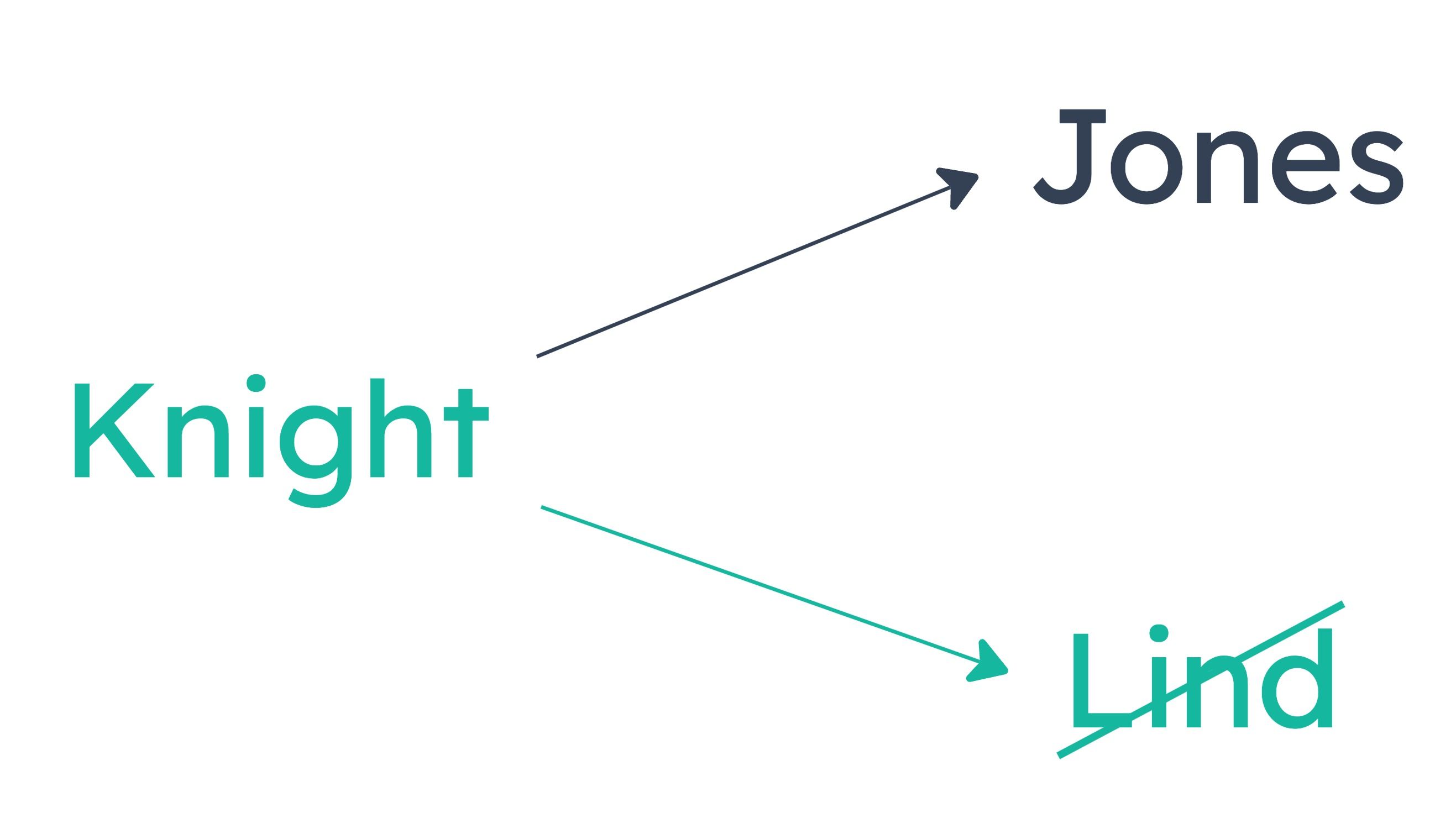
This must be true. As shown in the diagram, Knight and Lind cannot both be included in the textbook. Including Knight means we must also include Jones. This implies that we cannot include Lind, since we cannot include all three authors.
B
The textbook will contain an essay by only one of Lind, Knight, and Jones.
This could be false. It could be the case that two authors are included in the textbook.
C
The textbook will not contain an essay by Knight.
This could be false. The textbook could contain an essay by Knight and Jones.
D
If the textbook contains an essay by Lind, then it will also contain an essay by Jones.
This could be false. The textbook could contain an essay by only Lind.
E
The textbook will contain an essay by Lind.
This could be false. It could be the case that only Knight and Jones are in the textbook.

13 comments

People who object to the proposed hazardous waste storage site by appealing to extremely implausible scenarios in which the site fails to contain the waste safely are overlooking the significant risks associated with delays in moving the waste from its present unsafe location. If we wait to remove the waste until we find a site certain to contain it safely, the waste will remain in its current location for many years, since it is currently impossible to guarantee that any site can meet that criterion. Yet keeping the waste at the current location for that long clearly poses unacceptable risks.

Summary
There are people who argue against the proposed hazardous waste site based on implausible scenarios where the site fails. These people overlook the significant risks associated with delaying moving the waste from its currently unsafe location. If the waste is not moved until a safe site is found, the waste will remain in its current location for years. This is because it's impossible to guarantee that any proposed sight will meet the criteria for being labeled “safe.” Keeping the waste at the current unsafe location for that long presents unacceptable risks.

Strongly Supported Conclusions
The waste should be moved to a new site to reduce risks

A
The waste should never have been stored in its current location.
The stimulus does address past decisions. It is purely concerned with what future actions should be taken.
B
The waste should be placed in the most secure location that can ever be found.
This is antisupported. The stimulus argues against waiting for the most secure location because leaving the waste in the current location presents far too many risks.
C
Moving the waste to the proposed site would reduce the threat posed by the waste.
The stimulus acknowledges that moving the waste is risky, but that it would outweigh the risk of leaving it in its current location. Thus, moving the waste to the proposed site would decrease the overall risk.
D
Whenever waste must be moved, one should limit the amount of time allotted to locating alternative waste storage sites.
This is too broad to support. The stimulus is only concerned with this specific instance and there is no indication that this reasoning should be applicable to “whenever waste must be moved.”
E
Any site to which the waste could be moved will be safer than its present site.
This is too strong to support. The stimulus suggests that the *proposed* site would be safer, not any site whatsoever. What if the waste was dumped on a daycare?

25 comments

A recent survey indicates that the average number of books read annually per capita has declined in each of the last three years. However, it also found that most bookstores reported increased profits during the same period.

"Surprising" Phenomenon
Why have most bookstores reported increased profits in the last three years even though a survey shows the average number of books read annually per person has declined in each of the last three years?

Objective
This is an EXCEPT question. The four wrong answers will tell us something has changed over the past three years that might lead to more bookstore profits despite a decline in average books read.

A
Recent cutbacks in government spending have forced public libraries to purchase fewer popular contemporary novels.
If libraries have fewer popular contemporary novels, more people might be going to bookstores to read those popular novels. This is how bookstore profits might have increased despite a general decline in books read.
B
Due to the installation of sophisticated new antitheft equipment, the recent increase in shoplifting that has hit most retail businesses has left bookstores largely unaffected.
This tells us bookstores haven’t been very affected by a recent spike in shoplifting. But we would still expect bookstore profits to be lower due to the general decline in reading. (B) isn’t giving us a reason to think bookstores could somehow increase their profits.
C
Over the past few years many bookstores have capitalized on the lucrative coffee industry by installing coffee bars.
Bookstores might be making more money from coffee bars today compared to the past. This could explain how bookstore profits could increase despite an overall decline in books read.
D
Bookstore owners reported a general shift away from the sale of inexpensive paperback novels and toward the sale of lucrative hardback books.
Bookstores might be selling more hardback books, which have higher profits margins (”more lucrative”). This could explain how bookstore profits might have increased despite a general decline in books read.
E
Citing a lack of free time, many survey respondents indicated that they had canceled magazine subscriptions in favor of purchasing individual issues at bookstores when time permits.
People might have increased purchases at bookstores in lieu of reading magazines delivered or emailed directly to them from a subscription. This could explain how bookstore profits might have increased despite a general decline in books read.

57 comments

The question stem reads: The reasoning in which of the following is most similar to that in the naturalist's argument? This is a Parallel question.

The naturalist begins by claiming that a species can survive the change in an environment as long as the change is not too rapid. The naturalist has provided a general rule saying that the change can be ok for a species, with the caveat that the change does not occur too rapidly. The naturalist concludes that the threats humans create to woodland species arise not from cutting down trees but from the rate at which we are cutting down trees. The naturalist has applied the universal rule about species to the specific example of woodland species. So the problem is not that change we are creating by cutting down trees, but the because we are causing the change too rapidly.

When evaluating an answer choice, we need a universal rule with a caveat. The correct AC will apply that universal rule to a specific example and say that the specific example is failing to satisfy the caveat.

Answer Choice (A) is incorrect. (A) does not provide a universal rule; it only gives a specific rule about fossil fuels. Additionally, (A) 's rule about fossil fuels lacks the caveat we are looking for.

Answer Choice (B) is incorrect. We can quickly eliminate (B) because of the word "many." Remember, we need a universal rule, so if (B) was right, it would begin with "all people." Additionally, (B) 's rule lacks the caveat we are looking for, nor does (B) apply its rule to a specific example.

Answer Choice (C) is incorrect. Similar to (B), we can eliminate (C) because it says "some" when we are looking for a universal rule. Additionally, (C) also lacks the caveat, nor does (C) apply the rule to a specific example.

Correct Answer Choice (D) matches the stimulus. (D) provides a general rule that "people do not fear change," under the caveat people know what the change will bring. (D) then applies that rule to the specific example of the author's company's employees. The company's employees' fears arise from the fact the company is changing, but because they do not know what the change will bring (the caveat is not satisfied).

Answer Choice (E) is incorrect. (E) does not provide a general rule, so we can eliminate it.


25 comments